
Yesterday I had a pretty good practice session on my saxophone. I worked on my long tones to start, as I try to do each day. Then I did some overtones. So far so good everything was going as planned. Then I did scales and they went OK. It was a pretty good start to the practice session.
Disclaimer: As an Amazon Associate, this post contains an affiliate link where I earn from qualifying purchases at no extra cost to you.
Practicing in the Real Book
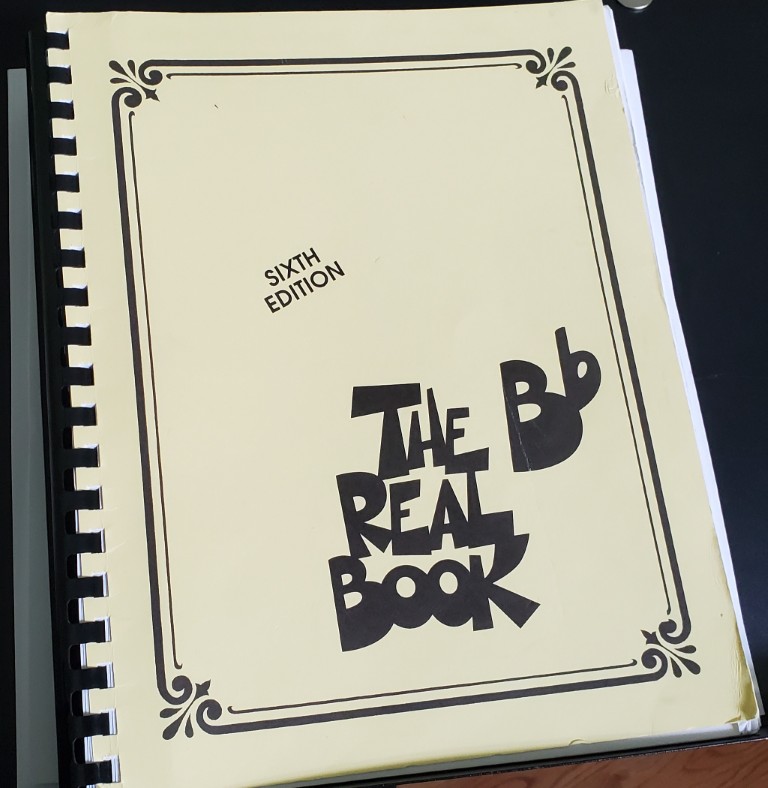
Next I switched gears and started looking at charts in my Hal Leonard Bb Real Book Vol. 1 The Real Books, if you aren’t familiar with them, are the legal and authorized copies of various Jazz standards. This contrasts with a Fakebook which contains unauthorized songs people have transcribed and collected together. The book I was practicing out of is the Hal Leonard Bb Real Book Vol. 1 which has a lot of great tunes in it, including “Oleo.” If you are getting a Real Book for yourself make sure you are buying the correct version for your instrument.
As I was practicing I was flipping through charts and playing whatever song I landed on (mostly) and I flipped to “Oleo” by Sonny Rollins. Of course Sonny Rollins just passed away a couple weeks ago. He was a tenor titan among Jazz saxophone players. I decided to run through “Oleo” and work on it a bit. I started by sightreading through the song without any accompaniment. I did that several times. The notes laid pretty well so it wasn’t very hard to put together the notes and rhythms. I found that the notes in the 4th measure were technically very easy to play and fit very well under my fingers. The A to A# to B feels very smooth, especially so if you are up on practicing the chromatic scale.
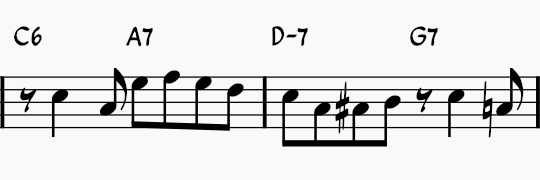
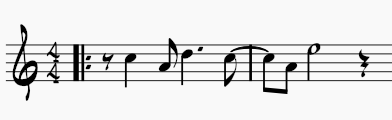
Oleo starts on an upbeat and has quite a few syncopated notes in it, but that’s what makes the song interesting! It’s a good song that isn’t too hard for working on syncopation and upbeats.
Listening to Oleo by Sonny Rollins
After working on the piece a little I went to YouTube to look up and listen to Sonny Rollins actually playing it. I did that for several reasons:
- Rhythmic Accuracy: Making sure I wasn’t misinterpreting the swung lines.
- Stylistic Feel: Hearing exactly how the composer intended the space and articulation to sound.
- Tempo Matching: Giving myself a target speed to play along with.
Oleo went together very well with little difficulty getting it up to speed with Sonny’s tempo. Then I pulled up the backing track!
Using a Backing Track with the Realbook
Hal Leonard’s Real Books can (they don’t always) come with backing tracks that you can download on to your devices and play along with. Mine came with a USB drive that contained the mp3 files but other version have a link to a download. It’s a great tool so you can get used to the chords changes then improvise along with them. I was a little shocked to hear the tempo for Oleo on Hal Leonard’s backing tracks was significantly faster than Sonny Rollins’ own tempo! It must have been 20-30 beats faster. I didn’t check it so I don’t know exactly but it was a lot faster.
So I kept going! I don’t have a way to speed up or slow down the backing tracks so it is what it is, I just have to step up my play to match the tempo provided. It took a few times but I finally was able to make the faster tempo work. It’s like one of those times in Marching band where your director puts the metronome into the loudspeaker and you have to play the tempo – or else!
By pushing myself to the tempo provided it simulated the “sit in with the band experience” a little. I had to step up to the faster tempo. There wasn’t another option. Sometimes the sink or swim approach can trigger something in your brain. You get a little adrenaline rush when you push yourself and you find that you can step up to the challenge.
The big difference, though is that you can mess up as many times as you want and go back and try it again. No one is watching you crash a solo, play a wrong note, or get totally out of rhythm. Think of backing tracks like you would a flight simulator. They are an opportunity to gain some experience without totally crashing into the ground! Then when you are playing in a band or even solo you will have a foundation already built and you can play confidently on stage.
There are real world conditions these backing tracks can’t account for but think of the tracks as one amazing tool that can help build up your abilities.
A Sidenote!
Here’s an interesting tidbit about “Oleo.” Sonny Rollins wrote his song using the chord changes derived from George Gershwin’s “I got Rhythm!” Gershwin’s 32 bar set of chord changes are known as Rhythm Changes and have inspired several other songs in addition to Oleo. Because chord changes cannot be copyrighted putting a new melody on top of them is perfectly legal. This is what is called a contrafact – taking an existing chord progression and putting a new melody over it.
Consider a contrafact a Jazz cheat code to learning multiple sets of chord changes. Essentially when you learn to play and improvise one of these charts you basically have a significant amount learned of the other ones as well!