
Stepping away from your instrument for a while is easy; stepping back to it is where the real work begins. For me, the biggest hurdle wasn’t reading the music, it was pure physical endurance. How you practice your instrument is extremely important to getting back into playing. My embouchure wasn’t able to play for very long. It takes regular practice over a period of time to build that back up. My fingers were agile and able to move along the keys but the feel on the horn was off. I would have blips where my finger coordination wasn’t in sync with my tonguing. Here’s how I fixed these issues, and it began with a regular pattern of practice.
Long Tones (5-10 minutes)
I didn’t take long tones very seriously when I was younger. They were boring. I wanted to play lots of fast notes or get right into the piece I was practicing. I usually started with scales, which are great for technique, but getting a good tone is critical! Long tones are the best way to improve your tone.
There are a lot of ways to practice your long tones but here’s what I do. I start around a low G then hold the note while looking at my tuner. I make adjustments with my embouchure to hold the note in tune. Then I’ll go chromatically down the horn with each note. When I get to the bottom I’ll go back to G and go upwards all the way to the high palm key notes. You’ll be amazed at what you learn about your horn’s intonation through this!
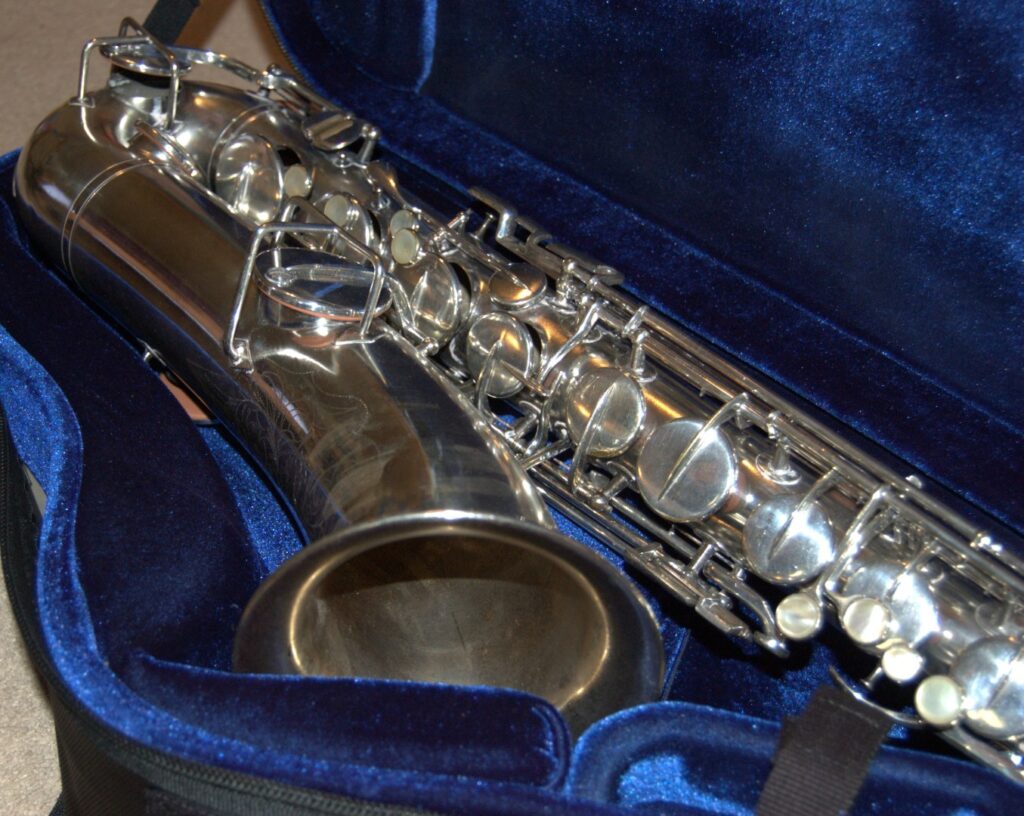
I play on a vintage Buescher True Tone from 1924 with a Jody Jazz Custom Dark 7* mouthpiece. Its intonation is amazing from high G or so down the horn. It gets very sharp as I go upwards toward the high D. On those notes I’m having to open up my throat in order to get the pitch into a reasonable area. That’s when the tone tends to suffer the most. With air support and practice it is gradually getting better in tone and in pitch.
Hold long tones for at least 4 counts to start with then gradually increase the length as your breath support and time allow. If you only have 20 minutes to practice it’s still valuable to do 5 minutes of that practice with long tones. It’s a practice technique that builds on itself over time so repetition each practice session is important!
Variations on Long Tones
I’ll do variations of long tone exercises so things are not the same each day. Some days I’ll do long tones on chords. Start on a low D and go up the major 7 chord doing long tones. Then go up the D Major scale so that I’m starting on E playing an E minor 7. Then an F# minor 7 and so on until I’ve gone up the whole D scale playing 7 chords in long tone format.
You can do Long Tones on music pieces that you are working on as well. Just take a passage that you need to work on and play each note as a long time. This not only practices your breath support, embouchure, and intonation but also practices the notes and gets them solidly under your fingers.
Overtones as Longtones
Every note has a series of overtones. Briefly, these are notes that are harmonic frequencies above the note you are playing. From the note you start on the first overtone is an octave over that. So on saxophone if you play a low D you play the overtone of that and it is the Middle D but you are playing it without using the octave key. Above the middle D you could do a 5th which would be the A.
The overtone series gets tighter with each overtone. The next interval is a 4th which brings you to the high D, then a 3rd to F# above that. It continues above and beyond that into the altissimo notes. For my practice I’m just doing the first overtone. I’ll expand later into the higher ones. Practicing overtones allows you to hear the pitches that are sounding within each note and helps you to create a richer, more full sound. As a side benefit it can help with mastering the altissimo range.
I just do a few series of these overtones as long tones going from low D up to G but you can expand them as far as your ability allows. Always remember that what you practice today you build on to tomorrow!
Scales
Scales have always been a favorite practice exercise of mine! The nice thing about scales is that you can come up with all sorts of different exercises. Obviously there are the 12 major scales to start with. Work those up, get them nice and even, then speed them up. Next work on the minor scales: natural, melodic and harmonic. That’s where I would stop if you are just starting back up again. As you gain ability, speed, and accuracy you can add other scales like the pentatonic scale, blues scale, bebop scale, the modes, and then altered scales but don’t get overwhelmed.
If your time is like mine (very limited) then pick 3 to 4 scales to play each practice session. Work on them as slowly as you need to in order to play them even and perfect. Listen to the pitches while you play them slow. As you speed up the scales concentrate on evenness. You can add various rhythms and articulations to your scales to practice those techniques. The possibilities for practice are endless!
Arpeggio/Chord Practice
If someone in my household is listening to my practice they will likely hear what sounds like I’m just noodling on the horn. In reality I’m playing chords up and down. I mix them up or play up the scale in chords.
Using D as an example again I might start on a D Major Chord and go D – F#- A – C# to play a major 7 chord then do it again but with a C natural for the dominant, and a third time with an F natural as a minor 7 chord. You can do this for all the chords going up the scale.

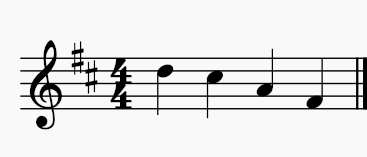
You could also start at the top of the scale too and do the reverse. D – C# – A – F#. You can pick any note of the chord and play it up and down your horn for the full range of your instrument. Or try patterns on the arpeggios start on the 3rd, go to the 7th, back to the root and up to the 5th. The sky is the limit on these chord arpeggios!
Quick Tip for the 20-Minute Practice Session
If you are tightly strapped for time, don’t skip the fundamentals to jump straight to the music. Split a short session like this:
- 5 Minutes: Long Tones (Focus on tone and tuner)
- 5 Minutes: 2–3 Scales or Arpeggios (Focus on evenness)
- 10 Minutes: Working Section of a Piece or Improvisation
Working Pieces and/or Improvisation
After I’ve done the scales and long tones that’s when I work on practicing pieces I’m trying to work up or practice improvisation. The big band I’m playing with has almost 80 charts in their book. I have a lot of material to work on. The range from swing to rock and have a lot of challenges for me to work on.
Play Along Tracks for Improv
For improvisation I do a couple things. There are a number of creators on YouTube who have channels where they put the background tracks and you can improvise along to the jazz standards. Often they will put a written out solo along with the changes which can get you a feel for the changes themselves. The songs have the melody so you can learn the Jazz chart itself and do a solo section. It’s a lot like the Jamey Aebersold books which are another great resource you could use.
I’ll do the playalongs but once I’ve finished the playalong track sometimes I’ll play the changes back in my head without music and continue to improvise along with them. I think that helps to internalize it better.
How Long Do I Practice?
My practice sessions are easily hitting an hour long now without noticing. By the time I’ve run through everything I want to hit the time goes very quick. If I don’t have an hour to practice I’ll still try to get in 30 minutes. Squeeze in what practice you can when you can. Even just picking up the instrument for a few minutes to do some long tones is valuable time well spent! While I almost always feel the urge to practice and get better I try hard not to beat myself up if I have to miss a session. Life sometimes has other important things for me to do so I have to prioritize.
1 Hour Practice Session
- Long Tones 10 minutes
- Overtones 3-5 minutes
- Scales 10 Minutes
- Etudes/Sightreading 10 Minutes
- Pieces I’m working up and improvisation 25-30 minutes
This is just an outline. Your practice session could differ depending on your needs.
My Goals
My goals are fairly simple but take repetition over time to accomplish: good solid sound/tone, good technique, and know my music well enough to not embarrass myself! The good news is that I’m seeing significant progress and it’s all because of the way I’m practicing.
When I was younger I hated the long tones. They seemed so boring. I didn’t get what their purpose was really. I’m not sure it was ever really explained to me well enough for me to buy into it. Today the most important thing for me to improve IS my sound. I want to sound like one of the great saxophone players of old. The only way to do that is to play, listen to what I am playing, and actually hear the sound through those long tones. My last piece of advice for this post is that you need to learn to love the process. The destination will arrive, and will arrive faster, when you focus on the process!