
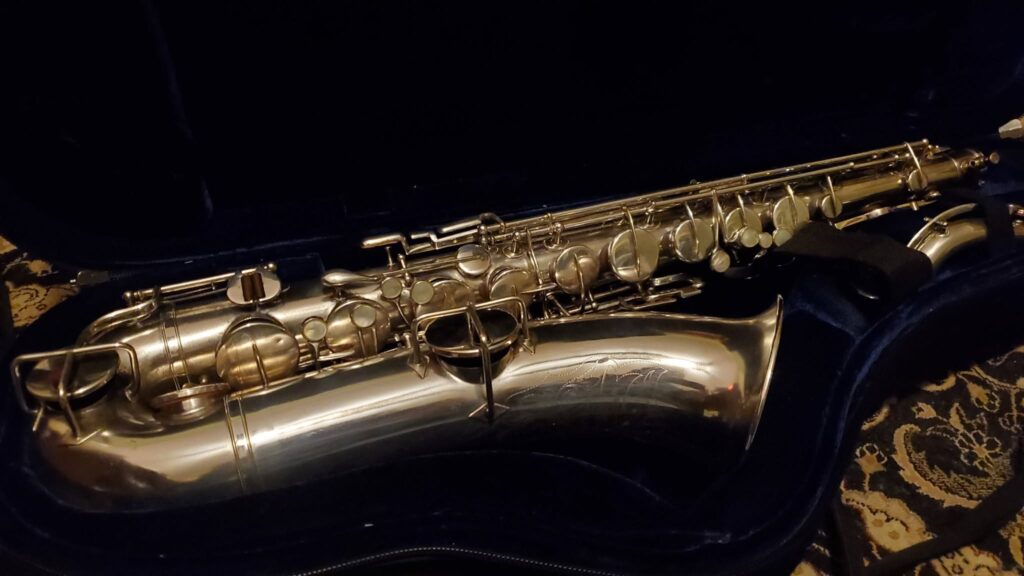
The other day we drove up to the Bandwagon Music Store in Nashville. I wanted to test out new tenor saxophones but we were also dropping off a clarinet and a trumpet for some repairs. My current horn is a Buescher True Tone from 1924 and you can trust me when I say things have changed a lot in 100 years! Today’s instruments (or even instruments from 30-40 years ago) are better designed ergonomically than those from the 1920’s. I still absolutely love my Buescher as far as tone, it’s silver finish, and the fact that is a piece of history.
They had quite a few available to test out including Cannonball, P. Mauriat, Yamaha, and even a Keilwerth. I’ll outline my general thoughts below on each brand but keep in mind that should you try out instruments like I did your thoughts could be very different. Picking an instrument can be a very personal decision and what works for me may not work for you and vice versa.
My Setup:
For consistency, I used my exact current mouthpiece setup for all tests: a Jody Jazz Custom Dark 7* with a Legere 2.75 American Cut reed. I’ve really enjoyed the longevity and consistency with the Legere reeds.
P. Mauriat 66R
The first tenor sax I tried was a pro line P Mauriat. I believe it was the 66R Tenor but I didn’t take “notes.” It was a beautiful horn but I found the intonation on it spotty in the upper register. I didn’t love the tone it had and very quickly I was able to put it down and move on to another horn.
Cannonball (Big Bell Series)
Linden at the Bandwagon checked in to the practice room and brought me a Cannonball Tenor to try. (By the way they have some really nice Practice Rooms at the Bandwagon. Lesson teachers use them for a variety of instruments) Unfortunately I didn’t enjoy that second Cannoball horn either. It was making an odd quavering sound on the low D key. Like it was trying to break into the overtones. It may have been a mouthpiece compatibility issue. I didn’t get my Meyer 5M mouthpiece out to test that so I can’t be sure. He swapped that one out for a different Cannonball. One of the Big Bell series. It had the same issue for me.
Yamaha Custom 82ZII (Unlacquered)
I moved on to try a Yamaha Custom 82ZIIU. It’s the unlacquered version. Over time it will patina and look like an old horn with a lot of character. It’s not really a look I want but I did want to test the Custom Z’s. It played well and the keys were perfectly aligned and consistent all along the horn. The sound was great as well. Yamaha is well known for their precision and in truth you can’t go wrong with a Yamaha pro line sax. It’s all going to depend on what you want to spend really.
Where Things Got Interesting!
Yamaha Custom 82ZII (Amber Lacquer)
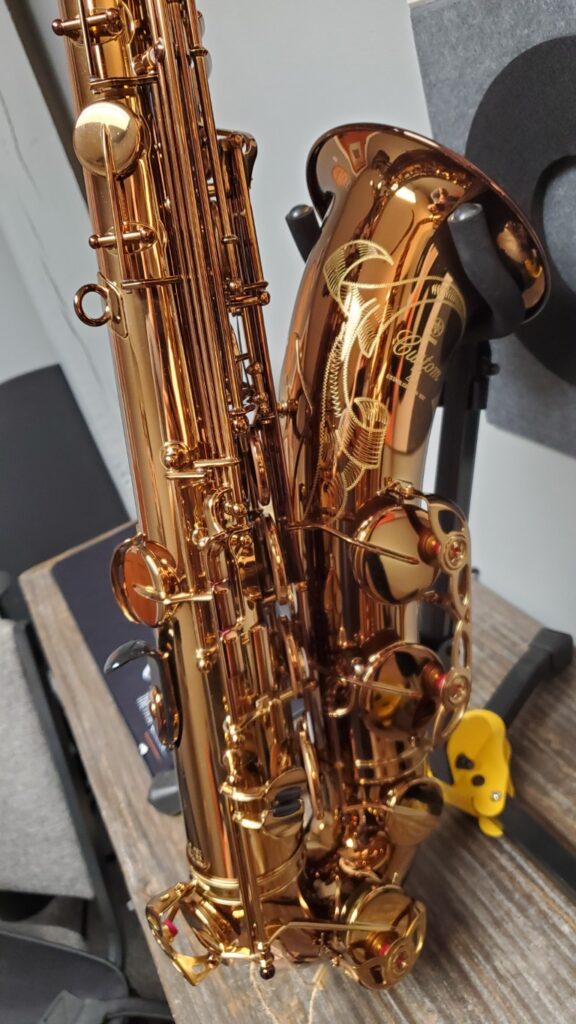
The next two horns was where things got very interesting. There was the Amber lacquered Yamaha Custom Z which looks amazing. The dark lacquer contrast with the engraving really stood out. The horn itself played awesome too. Intonation was good across the board except for the palm keys and upward. That’s pretty common to have difficulty tuning those. Most of that is offset by learning and gaining an affinity with the horn. The big down side on this Yamaha was the price. $7,189. That’s as low as you’ll find that model and finish as a new horn due to Yamaha’s pricing requirements. That instrument was easy to fall in love with. The Custom Z can be as versatile as the player. Change mouthpieces and you can go to Classical to Jazz to Rock sound instantly.
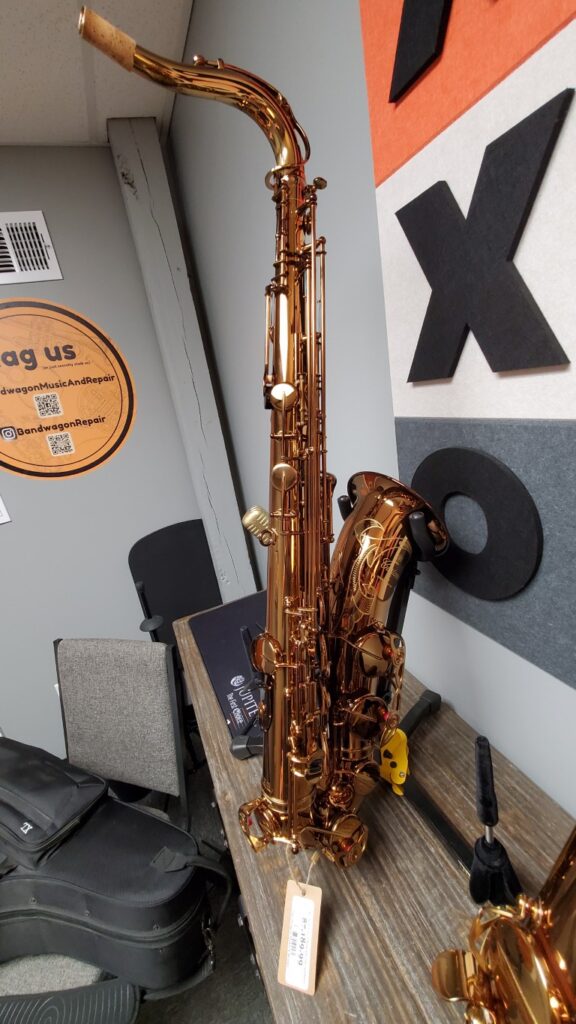
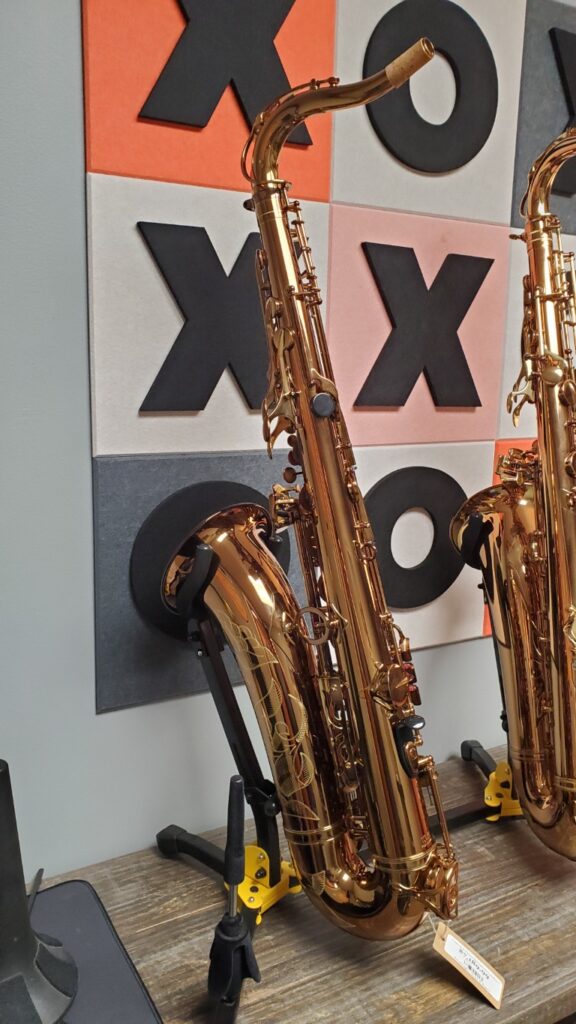
Keilwerth SX90
The last horn I’ll talk about, but it wasn’t tested last, was the Keilwerth sx90. The Keilwerth was the surprise horn in this testing. I really really liked it. The intonation was great all up and down. The sound was awesome. Much more like my Buescher than the other horns. Maybe even more like one of the Conn’s from way back. It was a wide and rich sound. If I had the money I would have walked away that day with the Amber Lacquered Yamaha Z and the Keilwerth. I would use the Keilwerth for when I wanted that old fashioned rich and thick sound. Then the Custom Z for the Big Band stuff, rock, and maybe even some classical.
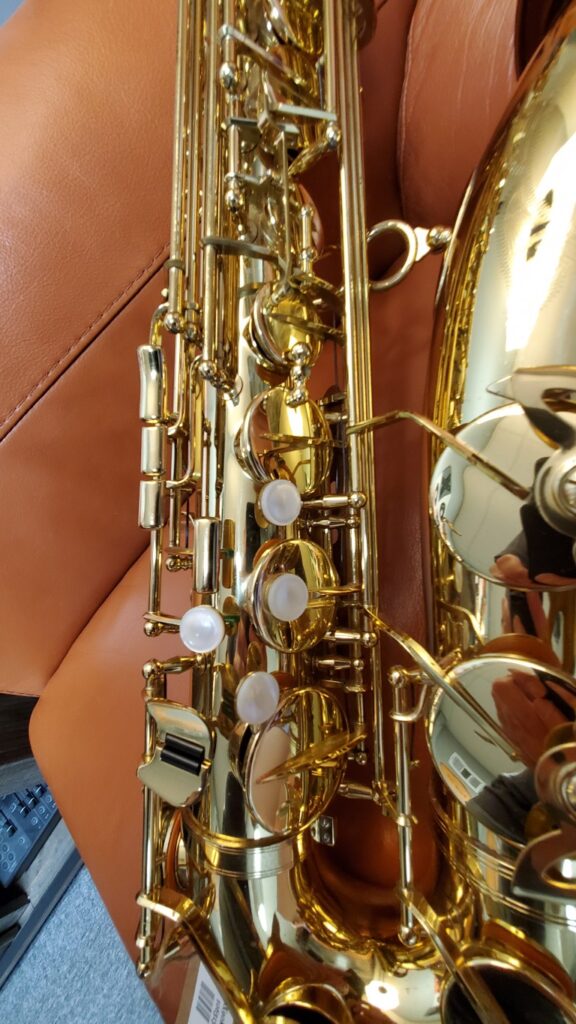
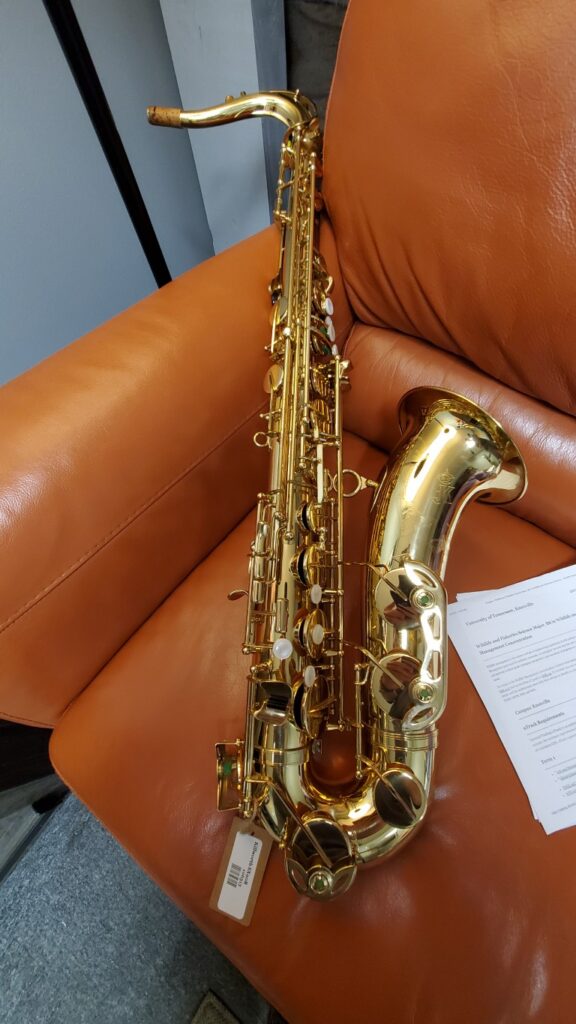
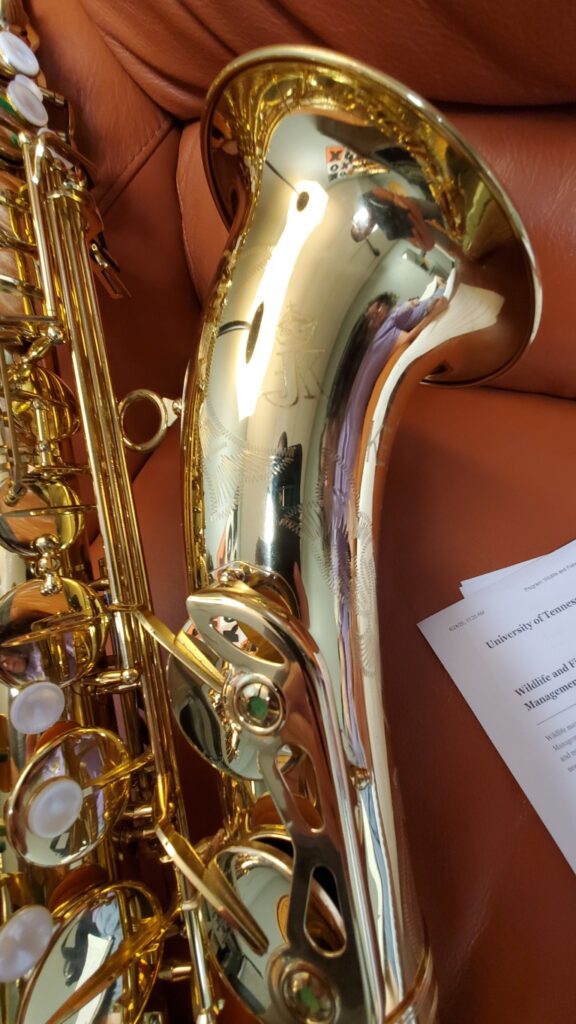
Sadly all of these horns are very expensive. The Keilwerth was used so it would have been more affordable. I think it was around $4200 somewhere, but even that is a lot of money. The Cannonballs were in the $3000’s somewhere but I didn’t pay a whole of attention to them to get the price. The Yamaha strikes me as a horn that has a ton of versatility. Just by changing the mouthpiece setup it could be used in a whole different setting. The Keilwerth is more of a specialized horn. It’s a fantastic horn and well deserving of its reputation but might not fit in with all settings.
Where Would I Put My Money?
I probably won’t be purchasing anything for a few months at least. My goal with this visit was to gain a better understanding of what you can find in today’s saxophones. But it is sooo tempting! I learned a lot about the instruments and can contrast them with other horns I might try in the future. For now if I were picking one it would be the Yamaha Custom 82ZIIA. It’s tone, ease of playing, ergonomics, and beauty really are at the top of all the saxophones today. It’s a masterpiece of a horn. It’s the one I would absolutely choose today for versatility and quality.
Also I want to mention the Bandwagon again, their hospitality was amazing. They gave plenty of time to test everything and never rushed me. They checked back periodically to see what I thought. It was a great experience and I highly recommend them for your music needs whether a new instrument or an instrument repair!