
If you’ve been away from music for a number of years there are a number of hurdles to overcome to get back into things. In my situation I kept my instruments, they just sat in a closet most of the time, but what if you sold your instruments a decade ago to help pay for one of your kids’ summer camps and now you don’t have anything to play on? That can be a huge barrier to reentry.
Just Getting Started
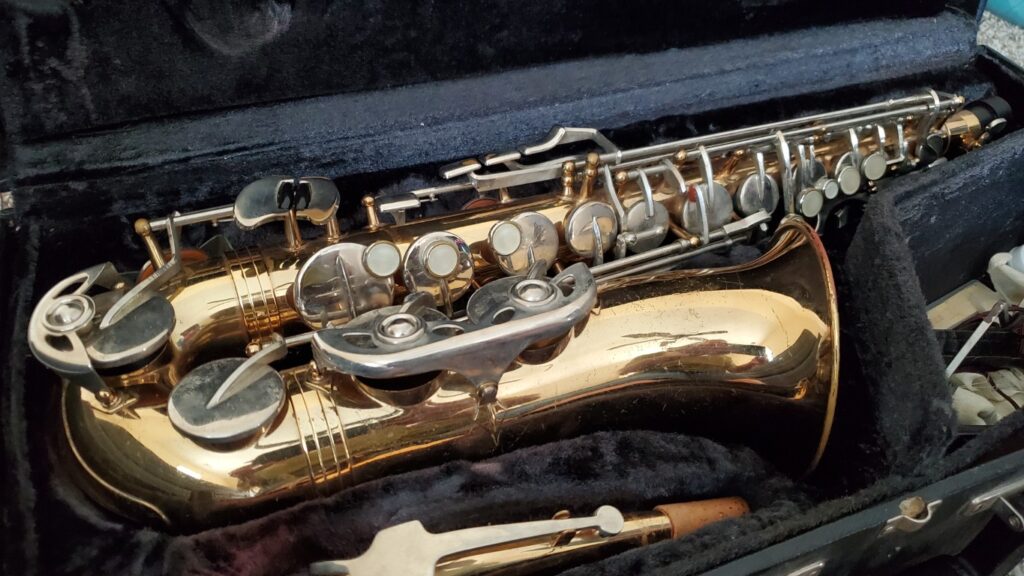
The most important thing is that you find a good working, solid, playable instrument to get back into music. You don’t have to go out and spend $3,000 to $8,000 to find one, and really – you shouldn’t! If you are just starting back to playing a lower priced student model horn is just fine as long as it is in good working condition. You may find that you want to upgrade later, which is great, but when first coming back it’s perfectly fine to pick up a cheap working student model horn.
Used Horns will Need Some Work
Almost any horn you pick up as a used instrument will need some work. Pads, corks, and other adjustments are very common for used instruments. In some cases they may need a complete repad, and in those cases that’s probably not the horn you’re looking for. Look for used horn advertisements that say “recently serviced” or “checked out by Technician.” These horns should be ready to go. Most of them probably won’t be so expect some extra cost in getting it set up.
What Brands Should You Look For? (The Safe List)
In the student saxophone realm, some brands stand out for consistency and reliability. That’s exactly what you want when hunting a used instrument. The following list is in no particular order. Keep in mind that the condition of the horn can vary greatly, but these brands should be well designed and easily repairable by a local technician.
- Yamaha – It’s hard to go wrong with a Yamaha. These horns are engineered for consistency and their student models are mechanically well put together to stand the test of time. They hold their value well so may be on the more expensive side of the list but if you go to resell it later you should easily get your money back.
- Vito – I played on a Vito alto sax for years! Before I upgraded to a pro-line horn, a Vito was what I used in concert and marching band. After I upgraded it became my marching horn so I didn’t damage my nicer horn in the elements. The Vito saxophones are very solid horns. Vito was a brand owned by the G. LeBlanc Corporation but partnered with Yamaha for decades to produce their student saxophones. These are essentially “stencils” of the student line Yamaha horns like the YAS-21, YTS-21, YAS-23, and YTS-23. You can get a horn built to the same standard and specs but cheaper than the horns stamped with the Yamaha brand. Vito used a couple other companies at different times. Look for the country it was made in to be sure it says “Japan” where the serial number is. My Vito is actually from Taiwan which would make the manufacturer of it KHS (the parent company of Jupiter). Depending on the year and model a Vito could be a Yamaha, Yanagisawa, or KHS.
- Jupiter – This is a brand that has come a long way over the years. They are easy to find and their quality is pretty good. Jupiter horns were not instruments we saw many of when I was a band director but a band director friend of mine said their quality is pretty good today.
- Bundy – Bundy saxophones were built by Selmer USA and are rugged saxophones. In all honesty I didn’t love the sound I heard from other players who played these when I was teaching. The plus side is that they are easy to find, work well, and are easy to repair. (And in fairness, the tone I was hearing back then may have had more to do with developing player embouchures than the instrument itself!)
Other honorable mentions: Conn, Armstrong, and King all have some quality student line instruments that you could pick up fairly cheap.
Try Out the Instruments First
In all cases I recommend testing the instrument out before purchasing if at all possible. With the advent of eBay and all sorts of music stores that ship instruments these days, trying the instrument out first may not be entirely possible. If buying from a music store check out the return policy. You may be able to get a test drive on the horn for a couple weeks and return it if the instrument isn’t the right one. Usually there is a restocking fee involved but it beats buying an instrument and realizing it isn’t the right one for you. The best case scenario is going to a music store and give the instruments a no obligation test drive.
Take a Rental for a Test Drive
Renting a horn isn’t just for kids in school band or orchestra. Why not check out a rental at a local music store for a couple months? Then you can upgrade to something else later without the purchase risk. You save some money upfront while you test yourself and see how you want to proceed. Rentals are normally student model horns and you can give them a try until you’re ready to step up to the next level!
The Mouthpiece Makes a Difference
The easiest way to upgrade your sound if playing on a lower priced or student model horn is to upgrade the mouthpiece. The student models typically come with a basic mouthpiece that probably sounds rather basic and ordinary. For classical players the traditional gold standard for saxophone has been the Selmer C* Mouthpiece. There are other a lot of other good mouthpieces out there but it’s hard to go wrong with the C*.
For Jazz saxophone players, there are tons of options, it can be overwhelming. I upgraded from a Meyer hard rubber mouthpiece this year to a Jody Jazz Custom Dark 7* and have really enjoyed how it plays. My sound is more rich and full. It took some practice to get used to it since the facing is a lot more open. It required that I move down in reed strength for a bit until I got used to it. Right now I use a Legere 2.75 (American cut) which works well for me.
Do some really good research on Mouthpieces because there are a lot to choose from and they may not work best on all horns. Coming up with a mouthpiece for my Buescher Tenor was a tough decision and while it’s not a perfect fit it’s close enough to manage.
Your Goals Matter
How you intend to add music back into your life will dictate exactly what you should look for in an instrument. If your long-term goal is to work your way toward a semi-professional or professional level, you will eventually want an instrument that matches those demands. However, if you are just wanting to play for fun at home or sit in with a local community big band, a solid student or intermediate-line horn may be perfectly fine.
My best advice is to focus on getting a solid, well-working instrument right now so you can avoid the immense frustrations caused by a leaky or poorly adjusted horn. As your abilities and interest grow, remember that you can expand your sound through your mouthpiece and reed combination without buying a whole new saxophone. Eventually, you may want to upgrade to a pro-line instrument, but gauge that milestone based entirely on your own interests, experience, and musical goals.